FSS Publications
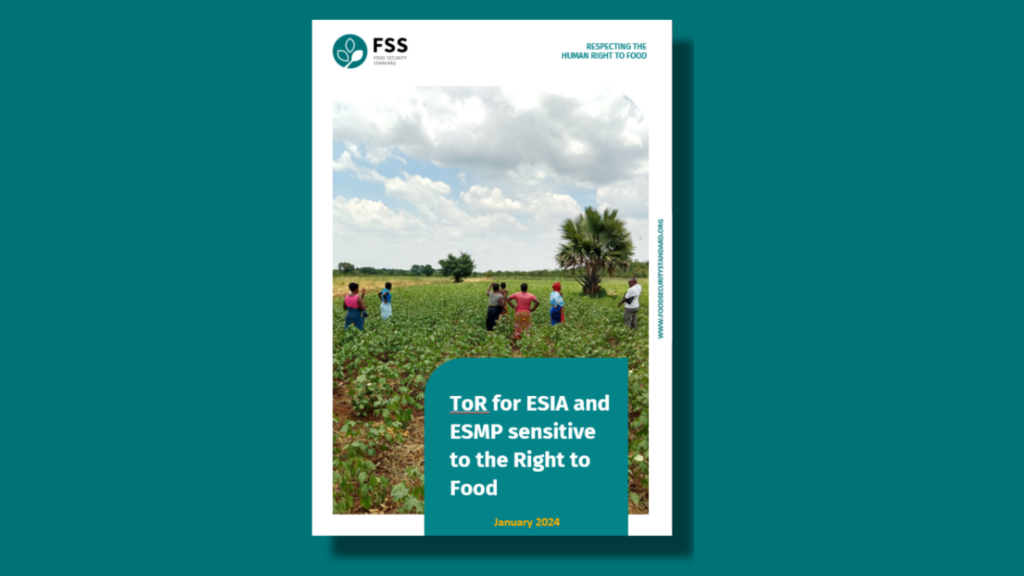
ToR for ESIA and ESMP sensitive to the right to food
An ESIA enables businesses to identify and predict their operation’s impacts, including on the food security of workers and the surrounding communities. Businesses can further develop responsible operations by conducting an Environmental and Social Management Plan (ESMP)—reflecting the right to food—to identify and develop adequate measures and controls for the risks identified by the ESIA. The Terms of Reference (ToR) aims to support those conducting tor updating the ESIA and ESMP to reflect the right to food. In addition, it can support organizations to guide businesses on ESIA and ESMP to better reflect the right to food within their guidance and materials.

Handout on the ToR for ESIA and ESMP
How to develop Terms of References for Environmental and Social Impact Assessment and Management Plan
Terms of Reference to Develop an Environmental and Social Impact Assessment and Management Plan Sensitive to the Right to Food
An Environmental and Social Impact Assessment (ESIA) and the respective Environmental and Social Management Plan (ESMP) allows for identifying the impacts and consequences a future project/intervention might entail, and establish adequate measures to manage the potential environmental and social risks and impacts.
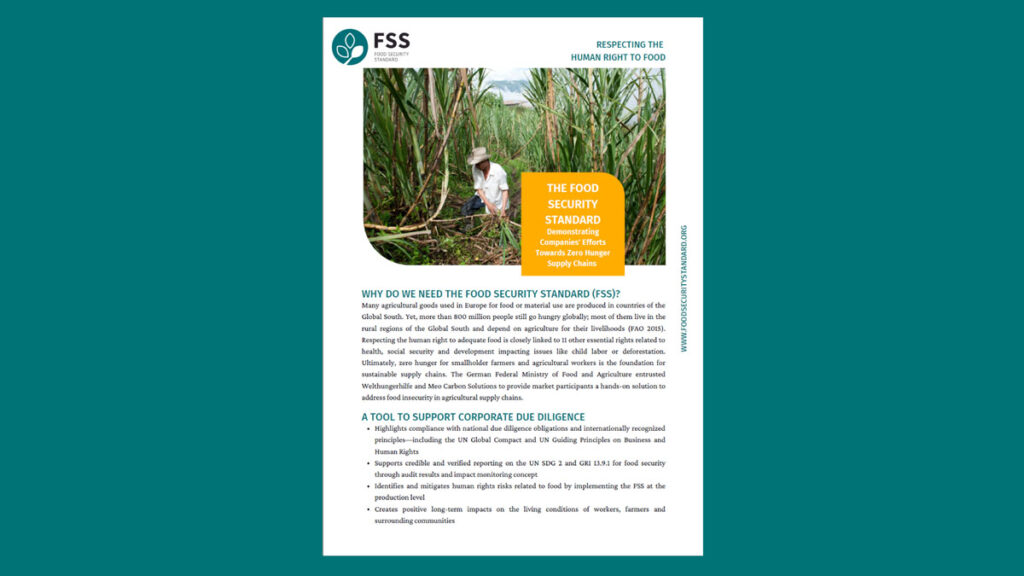
The FSS: Demonstrating Companies’ Efforts Towards Zero Hunger Supply Chains
This flyer contains the FSS solutions and tools as well as the services that the FSS can offer.
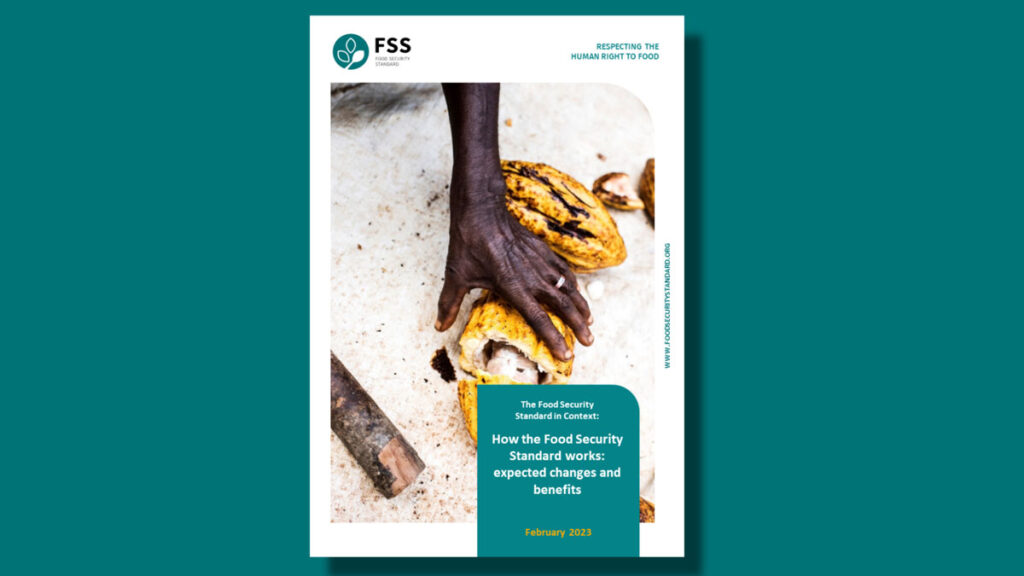
How the Food Security Standard works: expected changes and benefits
In order to change agricultural production in a way that meets basic human rights standards, it is crucial to build a theory of change for the instruments used.
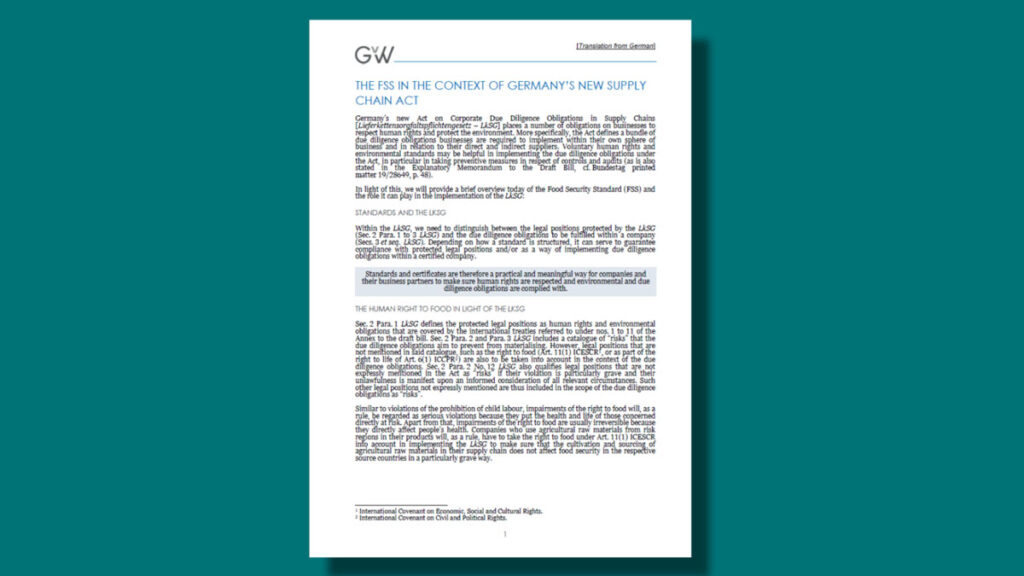
The FSS in the context of Germany’s new supply chain act
Handout on the positioning of the Food Security Standard as a tool to comply with the German Supply Chain Act (Lieferkettensorgfaltspflichtengesetz)